
Decision Fatigue: How Small Daily Choices Drain Your Willpower (and What You Can Do About It)
You wake up, check your phone, and instantly face a flood of choices. Should I reply now or later? Coffee or tea? Blue shirt or grey sweater? By the time you sit at your desk, you’ve already made dozens of tiny decisions—and it’s not even 9 a.m.
If you’ve ever felt mentally drained before the day has really begun, you may have experienced decision fatigue. It’s the hidden exhaustion that comes from making constant, seemingly small choices that chip away at your willpower and focus.
In this post, you’ll learn:
- What decision fatigue really is (and why it matters more than you think).
- The surprising science behind why too many choices exhaust us.
- Real-life examples of how decision fatigue shows up in everyday life.
- Practical strategies to reduce decision fatigue and reclaim your energy.
- Helpful tools—including printable planners and organisers—to make life simpler.
Let’s dive in.
Table of Contents
- What Is Decision Fatigue?
- The Science Behind Decision Fatigue
- How Decision Fatigue Shows Up in Daily Life
- The Hidden Costs of Decision Fatigue
- How Successful People Reduce Decision Fatigue
- Practical Strategies to Reduce Decision Fatigue
- Etsy Printables You Might Love
What Is Decision Fatigue?
Decision fatigue is the mental drain that comes from making too many choices throughout the day. Every decision, no matter how small, uses up mental energy. When your brain gets tired, your willpower weakens, leading to poor decisions, procrastination, or simply giving up.
Think of your decision-making energy as a battery. Each choice—whether it’s what to eat, how to respond to a text, or whether to take on an extra task—drains that battery just a little. Eventually, the battery runs low, and suddenly even the smallest decisions feel overwhelming.
The Science Behind Decision Fatigue
Why does deciding what to eat for breakfast feel harmless in the moment but somehow leave you with less energy later in the day? The answer lies in how our brains process choices.
Every time you make a decision, your brain draws from a limited pool of mental energy. Psychologist Roy Baumeister and colleagues described this as ego depletion—the idea that willpower, self-control, and decision-making all tap into the same fuel tank. Once that fuel runs low, your brain starts to resist effort and defaults to easier options.
Think of it like your phone battery. Opening one app doesn’t drain much power, but running dozens of apps at once causes the battery to fade quickly. In the same way, a single decision doesn’t tire your brain—but the constant stream of choices throughout the day adds up.
A Day in the Life Example
Picture this:
- Morning – You wake up and scroll your phone. Dozens of messages demand replies. Should I answer now or later? You decide to answer a few.
- Breakfast – The fridge is full, but nothing “sounds right.” After 10 minutes of debating, you settle for toast.
- Workday – Your inbox pings. Should I tackle the tough email or the easy one first? More mental energy gone.
- Evening – By the time dinner rolls around, you’re so drained from constant micro-decisions that cooking feels impossible. Takeout wins.
None of these choices are dramatic, but together they chip away at your mental stamina. That’s why small decisions often feel disproportionately exhausting by the end of the day.
What the Research Says
Studies consistently show that decision-making is tied to self-control and willpower. When we make too many decisions, we become more likely to:
- Choose unhealthy foods over nutritious ones.
- Procrastinate on meaningful work.
- Spend money impulsively.
- Say “yes” to commitments we regret later.
The takeaway is simple: decision-making isn’t just about logic—it’s about energy. Once that energy runs low, even the smallest choices feel like climbing a mountain.

How Decision Fatigue Shows Up in Daily Life
Food Choices
- Staring at the fridge, unable to decide what to eat.
- Ordering takeout because cooking feels too overwhelming.
Wardrobe Decisions
- Changing outfits multiple times before leaving the house.
- Feeling frustrated by “what should I wear?” every morning.
Digital Overwhelm
- Dozens of notifications begging for attention.
- Endless scrolling, not knowing what to click or reply to.
Social Energy Drain
- Putting off replying to messages because you “just can’t right now.”
- Saying yes when you meant no because deciding felt too hard.
The Hidden Costs of Decision Fatigue
Decision fatigue doesn’t just make you tired—it can impact:
- Productivity – more procrastination, fewer completed tasks.
- Health – poor food choices and skipped workouts.
- Relationships – irritability and avoidance of conversations.
- Finances – impulse spending because your brain wants the “easy option.”
When your brain is overloaded, you default to what’s easiest—not necessarily what’s best.

How Successful People Reduce Decision Fatigue
If you’ve ever wondered why some of the most successful people seem to wear the same thing day after day, it’s not because they lack style—it’s because they’ve found a clever way to protect their mental energy. By removing small, repetitive decisions, they save their brainpower for what truly matters.
Famous Examples
- Marie Kondo, the organising expert, applies her “spark joy” philosophy to her own life. By keeping her wardrobe minimal and intentional, she reduces decision fatigue while aligning her daily choices with her values.
- Barack Obama often wore only blue or grey suits during his presidency. His reasoning? He didn’t want to waste mental energy deciding what to wear each morning.
- Angela Merkel, former German chancellor, famously wore a rotation of nearly identical blazers in different colors, explaining that she didn’t want to spend her energy on trivial fashion decisions when bigger ones demanded her attention.
- Arianna Huffington, co-founder of The Huffington Post and Thrive Global, openly talks about simplifying routines, especially around sleep, to avoid the drain of constant choices. She focuses on habits that conserve energy for creativity and leadership.
The Common Thread
Whether it’s a world leader, tech innovator, or lifestyle entrepreneur, they’ve all discovered the same truth:
- Reduce trivial decisions.
- Streamline daily routines.
- Free up mental energy for the decisions that matter most.
And the beauty of this? You don’t need to be a president or a CEO to use these strategies. You can create your own “uniform” for certain parts of your life, plan meals ahead of time, or design habits that eliminate the need for constant decision-making.

Practical Strategies to Reduce Decision Fatigue
Decision fatigue happens when your brain gets overloaded by too many choices, leading to stress, procrastination, or poor decisions. Here are practical ways to reduce it:
1. Routines and Rituals
Routines turn decisions into automatic actions. By doing certain things the same way every day, your brain can focus on higher-priority choices.
Examples:
- Eat the same breakfast Monday–Friday.
- Lay out clothes the night before.
- Have a fixed bedtime wind-down routine (reading, journaling, or stretching).
- Schedule exercise at the same time daily.

2. Planning Ahead
Planning reduces daily “what should I do now?” decisions. Try batching decisions so your brain doesn’t have to constantly choose.
Examples:
- Meal prep on Sundays to avoid daily dinner stress.
- Use a weekly planner to map out work tasks, appointments, and errands.
- Plan outfits for the week in advance.
- Prepare a shopping list to avoid impulse buys.
3. Simplifying Your Environment
Clutter and too many options increase decision fatigue. Streamline your spaces to make decisions easier.
Tips:
- Keep only essential items in your wardrobe.
- Declutter your workspace and digital devices.
- Limit notifications on your phone to reduce distractions.
- Use simple menus or default options for recurring tasks.
4. Automating Decisions
Automation removes repetitive choices from your daily mental load.
Examples:
- Set up automatic bill payments.
- Use recurring grocery delivery for staple items.
- Create rules like “I only check emails twice a day.”
- Automate recurring tasks in your planner or calendar app.
5. Using Printables and Planners
Printables and planners act as external memory tools, so your brain doesn’t have to track everything. Writing it down once allows you to follow a clear plan instead of deciding on the spot.
Tips:
- Daily to-do lists with prioritised tasks.
- Weekly habit trackers to reduce mental juggling.
- Meal planners to pre-decide meals for the week.
- Budget templates to manage spending without constant thinking.
Extra Tip: Combine strategies for maximum effect. For example, plan your week using a printable, automate bills, and maintain a simple wardrobe. Your brain will thank you!
Etsy Printables You Might Love
If you’re ready to cut down on decision fatigue, here are some digital tools from my Etsy shop that can help:
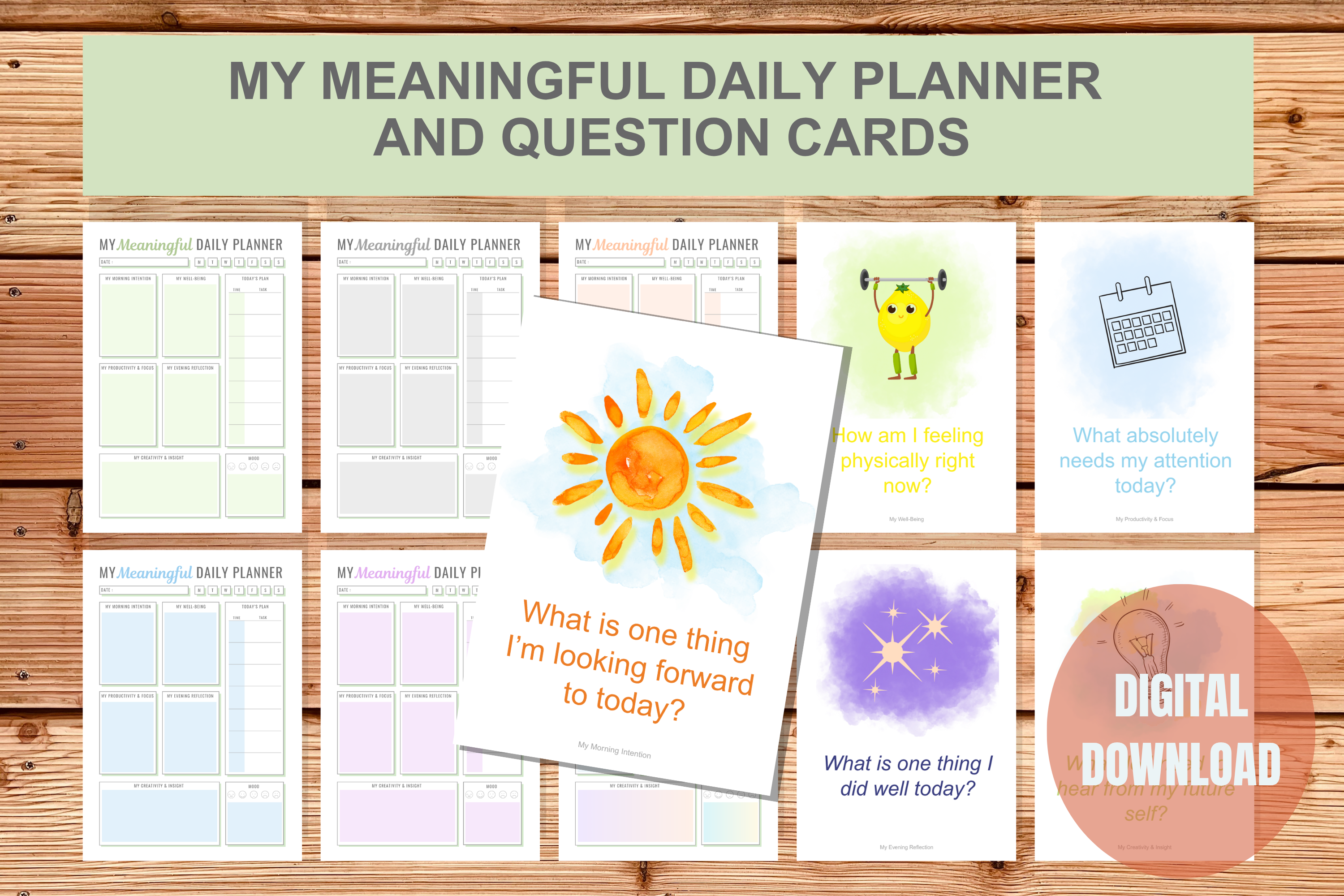
- My Meaningful Daily Planner and Question Cards – to help you focus on what truly matters.
- Meal Organiser – to simplify weekly food choices and save mental energy.
- My Dream Life Map – design your future without getting lost in endless choices.
Visit Anne Lawes Digital for more printables.
Decision fatigue may be invisible, but it has real power over our lives. The constant small choices—from what to eat to how to reply—slowly drain willpower, leaving us tired, frustrated, and less effective.
But the good news? By simplifying, planning, and creating routines, you can reclaim your energy. And with the right tools, you don’t have to make every decision in the moment—you’ve already made them once.
Life doesn’t have to feel like an endless stream of “what should I do next?”
Start small, simplify wisely, and protect your energy—you deserve it.
Do you have experience with decision fatigue? What choices drain you the most? Drop a comment below.