There’s something about this time of year that feels a little… different.
The air shifts. The days soften. Even if you can’t quite explain it, there’s a quiet nudge to slow down, reflect, and maybe—just maybe—let go of a few things you’ve been carrying a bit too long.
That’s where Samhain comes in.
Now before you picture anything overly mystical or complicated, stay with me. This isn’t about doing things “perfectly” or following strict rituals. It’s about reconnecting—with yourself, your past, and what truly matters.
In this post, I’m going to walk you through what Samhain really means in today’s world, how you can honour it in a simple, grounded way, and how it can gently guide you into a new season of clarity and renewal.
Think of this as a warm cuppa and a chat on the patio… with a bit of soul sprinkled in.
Samhain (pronounced sow-in) is an ancient Celtic festival marking the end of the harvest season and the beginning of the darker half of the year.
But here’s the thing—it’s not just about history.
At its heart, Samhain is about transition.
It’s that moment where you pause and say:
What have I been carrying this year?
What am I ready to release?
What do I want to take forward with me?
In today’s fast-paced world, we rarely give ourselves permission to stop and reflect. We rush from one thing to the next, ticking boxes, pushing through, and telling ourselves we’ll rest “later”.
Samhain gently taps you on the shoulder and says… maybe now is a good time.
Take a moment to pause and quietly reflect
The Deeper Meaning Behind the Season
Samhain isn’t about endings in a heavy, dramatic way. It’s more like a quiet closing of a chapter.
Think of it like:
Cleaning out a cupboard you’ve been avoiding
Letting go of clothes that no longer fit (physically or emotionally)
Sitting with memories—not to dwell, but to understand
It’s also traditionally seen as a time when the veil between worlds is thinner. Whether you believe that literally or not, it’s a beautiful invitation to:
Remember loved ones
Honour your roots
Reflect on where you’ve come from
And honestly, we could all use a bit more of that.
Southern vs Northern Hemisphere: When to Celebrate
This part often gets overlooked, especially here in Australia.
Northern Hemisphere: Late October to early November
Southern Hemisphere: Around May
If you’re in Australia, May aligns more naturally with the seasonal shift—cooler weather, shorter days, and that inward pull.
According to the Australian Government Bureau of Meteorology, seasonal transitions in Australia don’t always match traditional European calendars, so it makes sense to follow what feels right in your environment.
No need to overthink it. If the season feels like it’s asking you to slow down… you’re probably right on time.
There’s a moment when you realise… this is your life now.
Maybe it came after a big change. Maybe it crept in slowly. Or maybe one day you just stood in your kitchen, looked around, and thought, “Well… it’s just me.”
And that can feel like a mix of freedom and uncertainty all at once.
Living solo isn’t just about having your own space. It’s about learning how to support yourself in every way. Practically, emotionally, financially, and quietly, day by day.
Living alone isn’t just about having your own space.
It’s about becoming the one who holds everything together.
According to the Australian Bureau of Statistics, single-person households are steadily increasing across Australia. More of us are choosing independence, flexibility, and a life that reflects who we truly are.
But with that independence comes responsibility:
Managing your home
Staying on top of finances
Looking after your wellbeing
Creating structure where there isn’t any
And without support, it can all feel a bit… scattered.
What Makes the Living Solo Planner Different
This isn’t a planner that expects you to have it all together.
It’s built around real life. Messy days included.
Instead of focusing only on productivity, it supports:
Safety
Awareness
Emotional wellbeing
Confidence
Personal growth
Connection
It’s not just about managing life.
It’s about feeling steady within it.
Pack 1 — Welcome & Foundation
This is where everything begins.
Before routines, goals, or plans… you start with you.
This section gently helps you:
Reflect on where you are right now
Understand your current lifestyle
Set intentions for your solo living journey
It’s not about fixing anything.
It’s about grounding yourself and creating a starting point that feels honest and supportive.
Pack 2 — Situational Awareness
This one is quietly powerful.
When you live alone, awareness becomes your safety net.
This pack helps you:
Stay aware of your surroundings
Think through everyday situations
Prepare for unexpected moments
It’s not about fear.
It’s about feeling prepared and capable.
That subtle confidence of knowing, “I’ve thought this through.”
Pack 3 — My Solo Living Goals
Goals look different when you live alone.
They’re not always big, dramatic life changes.
Sometimes they’re simple:
Cooking more at home
Creating a peaceful space
Getting better with money
Feeling more confident on your own
This section helps you:
Set meaningful, realistic goals
Break them into manageable steps
Track your progress without pressure
Pack 4 — Home Safety & Security
Let’s be real for a moment.
Feeling safe in your own home matters. A lot.
This pack helps you take practical, calm steps to:
Improve home safety
Stay organised with important information
Create simple safety routines
Think of it as quiet reassurance.
Not overwhelming. Just thoughtful preparation.
Pack 5 — Home Management & Routines
This is where daily life starts to feel easier.
Instead of everything piling up, you create gentle systems.
This section supports:
Cleaning routines
Meal planning
Household organisation
Weekly structure
No strict schedules.
Just simple rhythms that help your home feel calm and manageable.
There’s a moment that used to happen in my kitchen more often than I care to admit.
I’d open the fridge, slide out the vegetable drawer, and stare at what I can only describe as the graveyard of good intentions.
A zucchini that looked slightly tired. Half a capsicum wrapped in cling film. A bag of spinach that had clearly given up on life.
And every time I’d sigh and think the same thing.
“Why didn’t I use this earlier?”
Food waste is one of those quiet little things that creeps into everyday life. We buy fresh ingredients with the best intentions. We imagine colourful meals, healthy snacks, maybe even a bit of cooking inspiration.
Then real life happens.
Busy days. Unexpected plans. A night where you simply can’t be bothered cooking and toast wins the dinner argument.
Before you know it, perfectly good food ends up in the bin.
A few years ago I started doing something simple that changed that pattern completely.
I started freezing small portions of food.
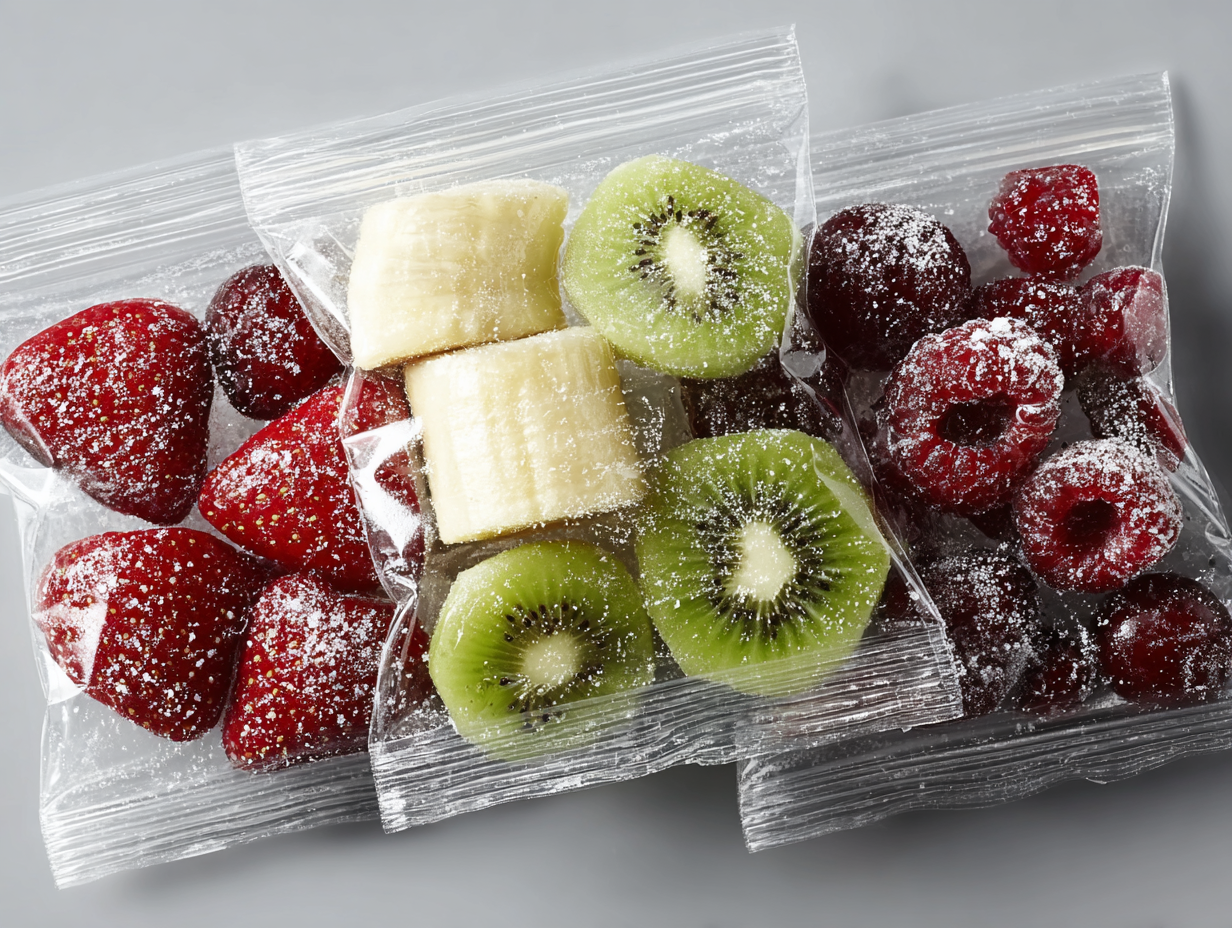
Not giant containers of leftovers that sit in the freezer for months and turn into mysterious ice blocks. I mean small bags of chopped fruit, vegetables, grated cheese, mashed potato, and other little ingredients ready to use whenever I need them.
It’s a tiny habit. Nothing fancy. Just a few minutes here and there while I’m cooking or unpacking groceries.
But over time it has made a surprising difference.
It saves money. It saves time. And it dramatically reduces food waste.
In this post I’ll share how this simple freezer habit works, what foods I freeze regularly, and how you can easily start doing the same thing in your own kitchen.
So grab a cup of tea, find a sunny spot if you can, and let’s talk about one of the simplest kitchen habits that quietly makes life easier.
Food waste isn’t just about throwing away food. It’s also about throwing away the money you spent buying it.
According to Foodbank Australia, more than 7.6 million tonnes of food are wasted in Australia every year, and households are responsible for a large portion of that waste.
That’s a staggering amount of perfectly edible food ending up in rubbish bins.
Grated cheese is especially handy to keep in the freezer.
Instead of buying more cheese when you run out, you can grab a handful from the freezer for pasta, toasties, or baked dishes.
The NSW Food Authority provides guidance on freezing food safely and effectively.
Freezing works best when food is still fresh. If something is already looking a bit tired, freezing it won’t magically fix it.
But freezing fresh food at the right time can extend its life dramatically.
How Freezing Small Portions Saves Money
Freezing food saves money in several ways.
First, it prevents waste.
If food doesn’t go in the bin, you don’t have to replace it.
Second, it helps you use everything you buy.
Instead of buying new ingredients for a meal, you might already have what you need waiting in the freezer.
Third, it reduces extra grocery trips.
When you know you have ingredients ready at home, it’s easier to skip those last-minute runs to the supermarket.
Over time these small savings add up.
And the grocery budget becomes a little easier to manage.
How This Habit Saves Time on Busy Days
Freezing small portions also saves time.
Cooking becomes much quicker when ingredients are already prepared.
You don’t need to chop vegetables from scratch or grate cheese.
It’s already done.
On busy days that makes a big difference.
Dinner can be as simple as:
• pasta with frozen vegetables and sauce • fried rice with frozen vegetables • omelettes with frozen spinach • soup made from frozen vegetables and pantry staples
It’s like doing small bits of meal prep without actually setting aside hours to meal prep.
How Freezing Reduces Food Waste
Reducing food waste has benefits beyond your grocery bill.
It’s also better for the environment.
The United Nations Environment Programme reports that reducing food waste is one of the easiest ways households can reduce environmental impact.
When food is wasted, the water, energy, and resources used to produce it are wasted too.
Freezing food before it spoils helps make the most of what we already have.
And that’s something worth doing.
Simple Freezer Tips That Make It Work
Over time, I’ve learned a few little tricks that make freezing food much easier—and less stressful.
Label Everything
This one is a lifesaver. Always label your freezer bags with the food and date. Trust me, mystery bags are not as fun as they sound. You want to know exactly what’s inside and when you froze it—especially if you’ve got a few bags of diced vegetables or chopped fruit all looking very similar.
Freeze Flat
One of my favourite hacks is freezing bags flat. Lay them on a tray or plate until frozen, then stack them like little pancakes in your freezer. It saves a ton of space, makes them easier to organise, and speeds up thawing. No more digging through a messy freezer to find that handful of frozen carrots you desperately need.
Use Small Portions
I can’t stress this enough. Small portions thaw faster and are easier to use. Plus, it stops you from defrosting a huge batch of something and then not knowing what to do with it. A handful of frozen fruit for breakfast, a small bag of vegetables for pasta sauce—perfect.
Rotate Older Food First
When you add new items to the freezer, move the older bags to the front. This ensures you use what’s been frozen the longest and prevents those sad, forgotten freezer surprises.
Use Plastic Bags Responsibly
I know some of you might be thinking, “But what about plastic?” And yes, plastic bags are not the most eco-friendly option. But honestly, they’re super handy for freezing small portions. They freeze flat, which saves space, and they thaw quickly, making meals come together faster on busy days.
If you’re worried about the environmental impact, there are a few ways to use them responsibly:
Choose reusable freezer bags where possible. Silicone or heavy-duty options can be washed and used dozens of times.
Rinse and reuse single-use bags. I often repurpose bags that held frozen fruit or vegetables if they’re clean.
Recycle soft plastics. Many supermarkets in Australia have soft plastic recycling programs, or you can check with your local council.
The goal is balance. Using plastic bags thoughtfully means you still get the time, space, and money-saving benefits of freezing small portions, without unnecessary waste.
Quick Meals You Can Make From Frozen Ingredients
Once your freezer is stocked with small portions, quick meals become incredibly easy.
A few favourites include:
• vegetable pasta using frozen diced vegetables • omelettes with frozen spinach and mushrooms • smoothies with frozen fruit • fried rice with frozen vegetables and leftover rice • soups made from frozen vegetable mixes
Sometimes the best meals are the simplest ones.
Especially when they come together quickly.
Delicious berry smoothies made with frozen fruit for a quick and healthy breakfast.
A Few Things That Don’t Freeze Well
While many foods freeze beautifully, a few don’t do so well.
Foods that don’t freeze particularly well include:
• lettuce • cucumbers • raw potatoes • cream-based sauces
These foods tend to change texture after freezing.
But for most everyday ingredients, freezing works perfectly.
Etsy Printables You Might Love
If you enjoy organising your kitchen and planning ahead, you might like some of the printable planners in my Etsy shop, AnneLawesDigital.
• Meal Organiser – to simplify weekly food choices and save mental energy.
Feeling lost after separation, retirement, illness, burnout or a big life shift? Here’s a warm, practical guide to help you reconnect with who you are now and rebuild your confidence, clarity and calm.
Have you ever caught yourself thinking, “I don’t even recognise myself anymore”?
Not in a dramatic, movie-scene way. More in a quiet, washing-the-dishes kind of way.
Maybe it crept in after a separation. Or when the kids left home. Or when retirement arrived and you realised your identity had been tied to a job title for 30 years. Or after illness changed your body and your energy.
One day you look in the mirror and think, Who am I now?
If that’s you, pull up a chair. Pour a cup of tea. Or wine. No judgement here.
In this post, we’re going to gently explore:
Why you feel disconnected from yourself after life changes
What’s actually happening psychologically
How to start rediscovering who you are now
Practical exercises to rebuild identity and confidence
Support services in Australia and beyond
Small, doable steps to feel like you again
This isn’t about reinventing yourself into someone shiny and perfect. It’s about meeting the version of you that’s emerging and saying, Alright love, let’s figure this out together.
Partner. Mother. Worker. Carer. Wife. Provider. The strong one. The fixer.
When one of those roles shifts or disappears, it can feel like the rug’s been pulled from under your bare feet.
According to the National Library of Medicine, identity loss during major life changes is significantly associated with psychological distress. When roles, routines or long-held identities shift, our sense of stability can wobble.
And that’s the key. Identity isn’t just who we are. It’s:
What we do daily
Who needs us
Where we fit
How we contribute
Remove those anchors and it’s no wonder we wobble.
The Psychology Behind “I Don’t Know Who I Am”
Psychologists often refer to this experience as an identity crisis. It’s not just a midlife cliché. It’s a real psychological adjustment process.
Erik Erikson, a developmental psychologist, described identity development as an ongoing process throughout life. When circumstances change, we reassess who we are.
Beyond Blue explains that life changes such as separation, job loss and retirement can increase vulnerability to anxiety and depression, partly because they challenge our sense of self and security.
It’s not weakness. It’s human.
Signs You’re Disconnected From Yourself
You might notice:
You don’t enjoy things you used to
You feel flat or restless
You’re constantly overthinking
You compare yourself to your “old self”
You feel like you’re drifting
Sometimes it shows up as irritability. Sometimes as sadness. Sometimes as endless scrolling and wondering why everyone else seems sorted.
You’re not broken. You’re transitioning.
Feeling flat or overthinking is a sign you may have disconnected.
The Grief No One Talks About
When we lose a relationship, career, health or lifestyle, we don’t just lose circumstances.
We lose:
The version of ourselves that existed in that space
The future we imagined
The routine that felt familiar
Grief isn’t only about death. It’s about change.
Organisations like Lifeline Australia acknowledge that adjustment periods after significant life changes can involve real emotional grief responses.
If you’ve been teary over what feels like “just a change”, give yourself some grace. Change can sting.
Step 1: Pause Before You Panic
When identity feels shaky, the temptation is to:
Reinvent everything overnight
Make drastic decisions
Cut your hair
Book a solo trip to Bali
Now, I’m not against Bali. But please, go slow first.
Instead:
Sit with the discomfort
Journal what feels different
Notice what you miss
Notice what you don’t miss
Ask yourself:
What parts of my old life truly fit me?
What parts was I tolerating?
You might be surprised.
Reflect on your thoughts and write down how you are feeling.
Step 2: Separate Who You Are From What You Do
One of the biggest traps is confusing roles with identity.
Instead of: “I am a wife.”
Shift to: “I am someone who values connection.”
Instead of: “I was a manager.”
Shift to: “I am organised, capable and strategic.”
See the difference?
Your core traits don’t disappear when circumstances do.
Try this exercise:
Identity Rebuild Prompt
Write down:
10 qualities you have that are not tied to a role
5 things people often compliment you on
3 challenges you’ve survived
That list is closer to you than any job title.
Step 3: Revisit Your Values
Values are your internal compass.
Research from organisations like Mind Australia highlights that reconnecting with personal values can significantly improve wellbeing during transitions.
Ask yourself:
What matters most to me now?
What feels non-negotiable?
What drains me?
What energises me?
Values might shift over time. At 25, you might have valued ambition. At 57, maybe it’s peace, independence and sunshine.
When life turns messy, your home usually follows. Here’s how to gently bring calm back without burning yourself out.
Let’s be honest.
When stress rolls in, it doesn’t politely knock. It barges through the front door, kicks its shoes off in the hallway, and leaves its emotional washing all over the house.
Maybe you’ve been dealing with illness. Maybe work’s been relentless. Maybe you’re navigating separation, burnout, ageing parents, teenagers, or just the general chaos of being human.
And suddenly your home feels heavy.
Laundry piles. Dishes stare at you. Paperwork breeds overnight. The once calm corner now looks like a storage unit with ambitions.
Here’s the thing most people won’t say out loud:
A messy home after stress is not a personal failure. It’s a survival pattern.
In this post, I’m going to walk you through a gentle, practical, and realistic way to reset your chaotic home after stress has taken over. No extreme decluttering challenges. No 4am miracle routines. Just steady, compassionate steps that actually work for real life.
You’ll learn:
Why stress shows up in your home
How to calm your nervous system before you start tidying
A step-by-step reset method that won’t overwhelm you
How to maintain a calm home even during difficult seasons
Simple ways to make your space feel supportive again
When you’re under stress, your brain shifts into survival mode. The amygdala fires up, and the prefrontal cortex, the part responsible for planning and organising, takes a back seat.
According to Beyond Blue, prolonged stress affects motivation, energy and executive functioning. That’s a fancy way of saying you’re too mentally exhausted to care where the Tupperware lid went.
The Black Dog Institute also notes that stress can reduce concentration and decision-making ability, which explains why standing in the middle of the kitchen feels like trying to solve a Rubik’s cube blindfolded.
International research backs this up. A study published by researchers at the Princeton University Neuroscience Institute found that physical clutter competes for your attention and increases cognitive overload.
Translation: the mess makes you more stressed, which makes it harder to clean, which makes you more stressed.
It’s not laziness. It’s biology.
Calm the Nervous System Before You Touch a Thing
Before you grab a bin bag, pause.
A calm home starts with a calmer nervous system.
The Headspace suggests grounding practices to reduce stress, and the Mind recommends small sensory resets to regulate emotions.
Here’s what that looks like in real life:
Open the windows
Make a cup of tea
Put on soft music
Light a candle
Set a 15-minute timer
Tell yourself this:
I am not fixing everything today. I am just beginning.
That shift alone changes everything.
The Gentle 6-Step Calm Home Reset Method
Step 1: Open the Windows and Shift the Energy
Fresh air matters more than people realise.
Light and airflow signal “reset” to your brain. Even five minutes of fresh air can improve mood and focus.
This is not about perfection. It’s about creating movement.
Step 2: Clear the Visual Noise
When a home feels chaotic, it’s usually visual clutter.
Start here:
Remove obvious rubbish
Gather dishes into one place
Collect laundry into one basket
Put stray items into a “decide later” box
You’re not organising. You’re reducing visual stress.
Research from the UCLA found that cluttered homes are linked to increased cortisol levels, especially in women.
Less visual chaos = less stress response.
Grab a rubbish bag and do a quick walk around the house.
Step 3: Create One Calm Anchor Spot
This is important.
Choose one small area that becomes your calm zone.
It could be:
A clear bedside table
A chair with a folded throw
One tidy kitchen bench
A small reading nook
Even if the rest of the house isn’t done, you’ll have one place that feels peaceful.
Psychologically, this gives your brain a reference point for safety and order.
Create a cozy nook where you can relax
Step 4: Reset High-Impact Zones
Don’t deep clean the spare room. Focus on areas that affect daily life.
High-impact zones:
Kitchen sink
Main bench space
Bathroom vanity
Entryway
Bed
When your bed is made and the sink is clear, life instantly feels more manageable.
According to the Sleep Foundation, a tidy sleep environment can improve sleep quality.
And we all know better sleep makes everything easier.
Clean and freshen up your kitchen sink
Step 5: Add Softness Back In
Stress strips warmth from a space.
Once surfaces are clear, reintroduce comfort:
Fresh sheets
Cushions
Lamps instead of overhead lights
Indoor plants
Meaningful art
This is where your space shifts from functional to supportive.
Your home should lower your shoulders, not raise them.
Start with fresh sheets and sunlight
Step 6: Create a Simple Maintenance Rhythm
Here’s where people go wrong. They reset everything, then expect perfection.
Instead, create a rhythm.
Try:
10-minute nightly reset
One drawer per week
Sunday surface clear
Laundry folded same day (or next day, we’re not saints)
Consistency beats intensity every time.
Give your surfaces a clean with a nicely scented cleaner.
The Psychology Behind a Calm Home
Our environment affects our nervous system.
The concept of environmental psychology shows how physical spaces influence mood and behaviour.
Studies from the World Health Organization highlight the connection between living conditions and mental wellbeing.
A calm home:
Reduces decision fatigue
Improves sleep
Supports focus
Encourages healthy routines
Lowers background stress
It becomes a place of restoration rather than another source of pressure.
When Stress Is Ongoing: Keeping Things Manageable
Sometimes stress doesn’t disappear neatly.
If you’re living with chronic illness, caring responsibilities, or major life change, aim for “functional calm” not showroom ready.
That might mean:
Baskets instead of perfect drawers
A weekly cleaner if budget allows
Asking family members to own one zone each
Letting some areas stay imperfect
You’re building sustainability, not Instagram.
Etsy Printables You Might Love
If you’re rebuilding calm, gentle visual reminders can help anchor that feeling.
Here are a few pieces from my shop that support a peaceful reset:
Valentine’s Day has a funny way of sneaking up on you. One minute it’s January and you’re still finding sand in your shoes, and the next minute the shops are drowning in pink balloons, overpriced roses, and cards that assume everyone is madly in love with someone who remembers to buy flowers.
If you’re single, newly separated, happily independent, or just not feeling the whole performative romance thing, Valentine’s Day can feel… awkward. A bit loud. A bit forced. And sometimes, if we’re being really honest, a little bit lonely.
But here’s the thing I’ve learned, somewhere between my fifties, my love of afternoon naps, a decent glass of red, and a dog who thinks every day is about her. Valentine’s Day doesn’t belong to couples. It belongs to love. And love comes in many forms, including the steady, quiet, deeply underrated love you have for yourself.
This post is about creating an amazing Solo Valentine’s Day that doesn’t feel like a consolation prize. One that actually feels good. Comforting. Empowering. Maybe even a bit fun.
You’ll learn how to:
Reframe Valentine’s Day so it works for you
Create simple, meaningful Solo Valentine’s rituals
Handle tricky emotions with kindness, not pressure
Celebrate your independence without pretending life is perfect
No toxic positivity. No pretending you don’t care. Just real, grounded ideas for making the day yours.
Solo Valentine’s Day isn’t about pretending you don’t want love. And it’s definitely not about swearing off relationships forever while eating chocolate straight from the box.
It’s about choosing yourself as worthy of care, attention, and celebration right now. Not later. Not once you’re partnered up. Not once your life looks more impressive from the outside.
Think of it as an intentional pause. A day where you stop measuring your life against someone else’s highlight reel and gently ask, what do I actually need today?
Sometimes the answer is rest. Sometimes it’s connection. Sometimes it’s wine and a movie you’ve seen seventeen times. All valid.
2. Why Being Solo on Valentine’s Day Isn’t a Problem to Fix
There’s a quiet message that floats around every February. If you’re alone on Valentine’s Day, something must be missing.
That message is rubbish.
Being solo can mean many things:
You’ve chosen peace over chaos
You’re healing after a big life change
You genuinely enjoy your own company
You’re in a season of rediscovering who you are
According to ABC Listen (Australia), more people are living alone than ever before, and many report higher levels of independence and self-awareness as a result. Being solo isn’t a failure. It’s a life stage, sometimes a long one, sometimes a short one, and often a meaningful one. If Valentine’s Day highlights that you’re on your own, that’s not a flaw. It’s information. And information can be handled with kindness.
Psychologists from Beyond Blue (Australia) often talk about the importance of self-compassion, especially during emotionally charged times of year. Valentine’s Day counts.
Instead of asking, why am I alone, try asking:
What would feel supportive today?
What would I like more of this year?
How can I be kind to myself tonight?
That’s the heart of Solo Valentine’s Day.
4. Setting the Mood for Your Solo Valentine’s Day
This is where Solo Valentine’s Day really starts to feel intentional.
Setting the mood isn’t about creating something Instagram-worthy or romantic in the traditional sense. It’s about making your space feel safe, comfortable, and like it belongs to you. Think less red roses, more exhale.
When you live solo, your home becomes an extension of your nervous system. The way it feels matters. Valentine’s Day is a lovely excuse to tweak that feeling, even just slightly.
Create a Space That Feels Like You
Start with what you already have. You don’t need to buy anything new or reinvent your home. Small shifts are enough.
A few gentle ideas:
Open the curtains and let natural light in during the day
Tidy just one small area so your eyes can rest
Light a candle or two as the afternoon fades into evening
Add a blanket, cushion, or jumper that feels comforting
This isn’t about perfection. It’s about removing friction. Anything that makes the space feel softer, calmer, or more supportive counts.
Let the Senses Do the Work
Mood is created through the senses far more than through effort.
Consider:
Sound: music that matches your emotional state, not what you think you should feel. Calm, nostalgic, instrumental, or even total silence.
Smell: a candle, essential oil, fresh air through an open window, or the smell of something cooking slowly.
Touch: soft fabrics, warm socks, comfortable clothes that don’t pinch or irritate.
You’re signalling to your body that it’s safe to relax. That matters more than any Valentine’s tradition.
Dress for Comfort or Confidence (Your Choice)
This part is often overlooked, but it makes a difference.
You can:
Stay in your favourite comfy clothes all day
Change into something that makes you feel quietly confident
Do a mix of both, comfort now, confidence later
There’s no right answer. The goal is to feel like yourself, not like you’re playing a role for anyone else.
Step Away From Comparison
One of the kindest mood-setting choices you can make is limiting what comes into your headspace.
If scrolling social media tends to leave you feeling flat on Valentine’s Day, it’s okay to step back. You’re not missing anything important. You’re protecting your peace.
Instead, you might:
Read a book
Listen to a podcast
Go for a short walk
Spend time with your pet
Presence is the real mood-setter.
Why not put on your favourite Pajamas, relax on the lounge, and read a good book?
5. Choosing Your Valentine (Hint: Coffee, Wine, Chocolate)
One of my favourite Solo Valentine’s traditions is choosing something indulgent and letting it be enough.
Some ideas:
Your favourite coffee, made slowly
A decent bottle of wine you’ve been saving
Chocolate you don’t have to share
A takeaway meal that feels like a treat
Food and drink are powerful because they ground us. They bring us into the present moment. And yes, they’re allowed to be pleasurable.
Who Needs a Valentine? Funny Digital Wall Art Set
6. Creating Simple Rituals That Feel Good
Rituals don’t have to be spiritual or complicated. They just need intention.
Gentle Solo Valentine’s Ritual Ideas
Write yourself a short note about what you’re proud of
Journal about what you’re letting go of this year
Take a slow walk with your dog and really notice the world
Watch a comfort movie without multitasking
According to Better Health Victoria, small self-care rituals can reduce stress and improve emotional wellbeing, especially during times of transition.
You don’t need to do all of these. One is enough.
7. When Valentine’s Day Feels Heavy
Let’s talk about the harder side.
If you’re recently separated, grieving, or feeling a bit raw, Valentine’s Day can sting. And no amount of pink candles fixes that.
If this is you, please hear this. You don’t need to turn Valentine’s Day into a celebration. You can turn it into a soft landing.
That might look like:
Logging off social media for the day
Keeping the evening simple
Letting yourself feel what comes up without judgement
If things feel overwhelming, support matters. In Australia, Lifeline (13 11 14) and Beyond Blue offer support during emotionally difficult times.
Solo Valentine’s Day is allowed to be quiet.
8. Solo Valentine’s Day Ideas for Different Moods
If You’re Feeling Peaceful
Read a book in the sun
Cook something nourishing
Early night, no guilt
If You’re Feeling Flat
Comfort food
Comfort TV
Comfort clothes
If You’re Feeling Hopeful
Vision board
Goal setting
Planning a small future treat
If You’re Feeling Strong and Independent
Celebrate how far you’ve come
Reflect on what you no longer tolerate
Toast yourself with something bubbly
There’s no wrong way to feel on Valentine’s Day.
Etsy Printables You Might Love
If you enjoy solo living, gentle self‑help, and creating small moments of meaning at home, a few thoughtful printables can make Valentine’s Day (and everyday life) feel more supportive and intentional.
You might not even realise your body is doing it at first.
A quiet tap of your teeth while you’re answering emails. A jaw that feels tight for no obvious reason. A little movement that seems to happen all on its own.
And then one day you notice it and think, Why can’t I stop this?
When your body is speaking, it rarely uses words. It uses sensations, habits, and small signals that are easy to dismiss or criticise. Stress habits like teeth tapping aren’t random, annoying behaviours. They’re messages. They’re your nervous system quietly saying, I’m under pressure and I need some support.
In this post, we’re going to slow things down and listen. You’ll learn why stress shows up in the body as habits, what teeth tapping and jaw clenching are really about, and how family stress, exhaustion, and lack of sleep all play a role. More importantly, you’ll discover gentle, realistic ways to respond without forcing calm or adding another thing to your mental to-do list.
No fixing. No shaming. Just understanding what your body is trying to tell you and how to meet it with a bit more kindness.
We’ve been taught to think of stress as a mental thing.
Too many thoughts. Too much worry. Too much overthinking.
But stress actually lives in the body first. The body reacts before the mind has time to explain what’s going on. It tightens, braces, prepares. That’s survival mode.
When stress becomes ongoing, especially family-related stress, the body doesn’t get the memo that it’s safe again. So it finds ways to release that built-up energy.
That’s where habits come in.
Common stress habits include:
Teeth tapping or jaw clenching
Nail biting or skin picking
Foot bouncing or leg shaking
Shoulder tension
Holding your breath without noticing
These aren’t bad habits. They’re coping strategies.
According to Beyond Blue Australia, stress often presents physically before people recognise it emotionally, especially in prolonged or complex life situations.
Your body isn’t being annoying. It’s being resourceful.
Teeth Tapping, Jaw Clenching and the Nervous System
Let’s talk about the jaw.
The jaw is closely linked to the fight-or-flight response. When your nervous system senses threat or pressure, it prepares the body for action. That includes tightening muscles that help you speak, bite, or defend.
Even when the “threat” is emotional.
Family conflict. Worry about loved ones. Unspoken resentment. Feeling responsible for everyone else’s wellbeing. It all lands somewhere, and often that somewhere is the jaw.
Teeth tapping is a form of micro-movement. It’s the nervous system discharging excess energy in a way that doesn’t require conscious effort.
The Australian Psychological Society notes that repetitive movements can be a sign of heightened nervous system arousal rather than anxiety disorders themselves.
In plain English? Your body is trying to calm itself.
A Real-Life Story: When the Body Takes Over
A few years ago, I went through a stretch where family stress sat on my chest like a brick.
Nothing dramatic on the outside. Life still looked functional. But inside, I was exhausted, worried, and quietly holding everyone together.
I didn’t notice the jaw clenching at first. Then came the headaches. Then the teeth tapping. Then the moment my dentist gently asked, “Have you been under much stress lately?”
I laughed. Of course I did. Then I cried in the car.
I wasn’t weak. I wasn’t failing. I was coping the only way my body knew how.
That realisation changed everything.
Why Sleep Deprivation Makes Everything Worse
If you’re not sleeping properly, stress habits tend to crank themselves up a notch.
Sleep is when the nervous system resets. When you’re tired, your body has fewer tools to self-regulate, so it relies more heavily on automatic behaviours.
According to Sleep Health Foundation Australia, chronic sleep deprivation increases physical stress responses and reduces emotional resilience.
This is why:
Small things feel enormous
Habits become harder to control
Emotions sit closer to the surface
And it’s also why telling yourself to “just relax” feels laughable when you’re running on four broken hours of sleep and a strong long black.
It’s layered. Emotional. Ongoing. Often invisible to outsiders.
You might be:
Supporting adult children
Caring for ageing parents
Navigating estrangement or conflict
Carrying worry you can’t fix
That emotional load doesn’t switch off at night. The body stays alert because it believes it needs to stay ready.
And so the habits continue.
As Lifeline Australia highlights, prolonged family stress can keep the nervous system in a constant state of vigilance, even when nothing is actively happening.
Why Telling Yourself to “Stop It” Doesn’t Work
Here’s the frustrating bit.
Stress habits don’t respond well to discipline.
They’re not conscious choices. They’re reflexes. When you try to force them away, your nervous system often reads that as more pressure.
Which leads to more tapping.
Instead of stopping the habit, the goal is to support the system underneath it.
Think of it like this. If the smoke alarm keeps going off, yelling at it won’t help. You need to deal with what’s causing the smoke.
What Your Body Is Actually Asking For
Most stress habits are asking for one of three things:
Safety
Release
Rest
That’s it.
Not a full lifestyle overhaul. Not yoga at sunrise unless you enjoy that sort of thing. Just basic nervous system needs.
Once you start responding to those needs, the habits often soften on their own.
Gentle Ways to Release Stress Without Forcing Calm
This is where we get practical.
Simple jaw release
Let your lips part slightly
Rest your tongue on the floor of your mouth
Drop your shoulders
Ten seconds is enough.
Swap the habit, don’t fight it
Offer your body a gentler movement:
Slow foot presses into the floor
Rolling your shoulders
Stretching your hands
Breathe for the exhale
Longer exhales calm the nervous system. Try:
Inhale for 4
Exhale for 6
Three rounds. That’s all.
Name the moment
Quietly say, “This is stress.” Naming reduces intensity.
According to Harvard Health, body-based calming techniques are more effective during stress than cognitive strategies alone.
Creating Safety Instead of Control
Here’s a truth we don’t talk about enough.
Calm doesn’t come from control. It comes from safety.
Safety looks like:
Letting yourself rest without earning it
Lowering expectations during hard seasons
Allowing emotions without fixing them
Sometimes the most powerful thing you can do is lie down, put your hand on your chest, and do absolutely nothing for five minutes.
Radical, I know.
Take a moment to relax and practice self-care to manage stress.
When Stress Habits Become a Health Issue
Most stress habits are harmless. But it’s worth checking in if:
Jaw pain becomes constant
Teeth are damaged
Headaches or neck pain increase
Anxiety feels unmanageable
A GP, dentist, or psychologist can help rule things out and offer support. There’s no medal for coping alone.
Etsy Printables You Might Love
If you’re someone who finds comfort in gentle structure, visual reminders, and small daily anchors, you might like these from my Etsy shop:
My Dream Life Map – Helps replace survival thinking with intentional planning.
No pressure. Just tools if you want them.
Teeth tapping isn’t a problem to eliminate. It’s a message to understand.
When you stop fighting your body and start listening to it, something shifts. The tension softens. The habits ease. And you realise you were never broken. Just tired, stressed, and doing your best.
And honestly, that’s enough.
If this resonated with you, I’d love to hear from you. Please leave a comment and share your experience
And tonight, if nothing else, unclench your jaw, pour a glass of something nice, pat the dog, and remember this:
Have you ever had that quiet thought creep in while you’re hanging out the washing or staring into your morning coffee?
Something needs to change… but I don’t have the energy for a full life overhaul.
Same, friend. Same.
The idea of “resetting your life” often gets tangled up with shiny planners, 5am wake-ups, colour-coded goals, and people who apparently never get tired. And honestly, that version can get in the bin.
This post is for the rest of us. The ones who are a bit worn around the edges. The ones who want change, but gently. The ones who don’t want to burn everything down just to feel better.
In this post, we’re talking about how to reset your life without overwhelming yourself. No dramatic reinvention. No pressure to become a new person by Monday. Just small, meaningful shifts that help you feel steadier, clearer, and more like yourself again.
You’ll learn:
What a gentle reset actually looks like
Why starting small is not lazy, it’s smart
Practical ways to reset your mind, routines, and expectations
How to move forward when your energy comes and goes
How to reset without buying a whole new personality
A gentle life reset is more like adjusting the sails, not rebuilding the boat.
It’s about:
Pausing long enough to notice how you’re actually feeling
Making small changes that support the person you are now
Releasing pressure, not adding more
Creating a bit more breathing room in your days
Think of it as a soft reboot. Like turning your phone off and on again. Same phone, just running a bit smoother.
Why Most Life Resets Feel So Overwhelming
If you’ve ever Googled “how to reset your life”, you’ve probably been hit with advice like:
Wake up earlier
Journal for 30 minutes
Exercise daily
Meditate
Eat perfectly
Plan everything
All at once.
No wonder we get overwhelmed. That kind of reset asks you to add more when you’re already tired.
Research from the Australian Psychological Society shows that mental overload and unrealistic expectations contribute significantly to burnout and stress. We don’t need more systems. We need kinder ones.
A gentle reset works because it:
Reduces decision fatigue
Respects fluctuating energy levels
Builds consistency slowly
Feels achievable on a bad day, not just a good one
Borrow calm from pets: Sit, watch and match your breath to theirs.
According to Beyond Blue Australia, regular gentle reflection and self-compassion practices reduce anxiety more effectively than harsh self-talk or avoidance.
You don’t need to be positive. You just need to be honest.
Resetting Your Energy, Not Your Entire Schedule
Here’s some hard-earned wisdom: You don’t have an organisation problem. You have an energy one.
Instead of asking, How can I fit more in? Try asking, What drains me the most?
Energy-Friendly Reset Ideas
Group errands on one day
Add rest before exhaustion hits
Leave white space in your calendar
Stop planning every hour
Design your day around your best energy window
Add 30 minutes between tasks
Sit Down to Do Things You Normally Stand For
Reduce Decision Fatigue Wherever You Can
Start Meal Planning
Research from the UK’s NHS supports pacing and energy management as essential tools for preventing burnout and chronic stress.
A gentle reset sticks when you anchor it to tiny habits.
Think:
Morning tea in the sun
A short walk with the dog
Lighting a candle in the evening
Writing one sentence in a journal
When life feels wobbly, it’s not grand plans that steady us. It’s the small, familiar things we return to again and again.
I like to think of daily anchors as little pegs in the ground. They don’t stop the wind, but they stop you from being blown all over the place.
Small daily anchors are simple, repeatable actions that signal safety and steadiness to your nervous system. They don’t require motivation, a good mood, or high energy. They just quietly happen, even on the days when everything else feels a bit off.
And over time, those small moments add up to real change.
Why Anchors Matter More Than Big Goals
Big goals rely on future energy. Anchors work with the energy you have right now.
Research in behavioural psychology shows that consistency beats intensity, especially when we’re tired, stressed, or navigating change. When something is small enough to do on a bad day, it becomes reliable. And reliability builds trust with yourself.
That trust is the foundation of any meaningful reset.
What Makes a Good Daily Anchor?
A good anchor is:
Small enough to feel easy
Familiar and comforting
Tied to an existing habit
Supportive, not demanding
If it feels like another thing on your to-do list, it’s too big.
Think less self-improvement, more self-support.
Morning Anchors: How You Begin Matters
You don’t need a miracle morning. You just need a gentle one.
Examples of morning anchors:
Drinking your first cuppa outside or near a window
Taking three slow breaths before checking your phone
Stretching your arms overhead while the kettle boils
Saying one kind sentence to yourself before the day begins
These tiny rituals help you start the day grounded, rather than already on the back foot.
Midday Anchors: A Pause in the Middle
Midday is where energy often dips and overwhelm creeps in. Anchors here act like a reset button.
Examples of midday anchors:
Stepping outside for fresh air, even for two minutes
Eating lunch away from screens
Standing up and rolling your shoulders
Taking a short walk, even just down the driveway and back
You’re not trying to recharge fully. You’re just stopping the drain from getting worse.
Evening Anchors: Closing the Day Gently
How you end the day matters just as much as how you start it.
Evening anchors help your body and mind understand that it’s safe to slow down.
Examples of evening anchors:
Lighting a candle after dinner
Writing one sentence about the day
Tidying one small area before bed
Sitting with your dog or cat and matching their breathing
These rituals create a soft landing, especially on hard days.
Anchors for Low-Energy Days
This is where anchors really shine.
On low-energy days, your anchor might be:
Getting dressed, even if it’s comfy clothes
Opening the curtains
Drinking water
Sitting in the sun for five minutes
If you only do your anchor and nothing else, the day is still a success.
That’s not lowering the bar. That’s making it reachable.
Anchors During Times of Change
When life shifts, anchors provide continuity.
After separation, illness, retirement, or loss, the world can feel unfamiliar. Anchors remind you that not everything has changed.
Maybe it’s:
The same morning walk route
The same song you play while making dinner
The same chair you sit in with your journal
Familiarity is deeply regulating. It’s one of the simplest ways to feel safe again.
How Anchors Turn Into Big Change Over Time
This is the quiet magic.
When you show up for yourself in small ways:
You build self-trust
Your nervous system settles
Decisions become clearer
Bigger changes feel less scary
You stop asking, What’s wrong with me? And start asking, What do I need right now?
That shift alone changes everything.
How to Choose Your Own Anchors
Ask yourself:
What already brings me comfort?
What do I naturally return to?
What feels doable even on a bad day?
Pick one or two. Not ten.
Let them be simple. Let them be yours.
A Gentle Reminder
Anchors aren’t about control. They’re about care.
Some days you’ll forget them. Some days they won’t feel magical. That’s okay.
The power of anchors is not in perfection, but in returning.
Again and again. In your own time.
Letting Go of What’s No Longer Working
This part of a reset can feel uncomfortable. Not because it’s hard to understand, but because it asks us to stop gripping so tightly.
We often hold on to things long after they’ve stopped supporting us. Routines, roles, expectations, even versions of ourselves that once made sense. Not because they’re still right, but because they’re familiar. And familiarity feels safer than the unknown.
Letting go doesn’t mean giving up. It means making space.
Why Letting Go Feels So Hard
There’s a quiet fear underneath letting go:
What if I need this later?
What if I fail without it?
What if this means I’ve done something wrong?
But here’s the thing. Outgrowing something doesn’t mean it was a mistake. It means it did its job.
According to research from the Australian Institute of Family Studies, life transitions often require a re-evaluation of identity, routines, and priorities. Resistance to change increases stress, while gentle acceptance supports wellbeing.
In other words, your discomfort makes sense. And it’s survivable.
Letting Go Is Often Subtle, Not Dramatic
Hollywood makes it look like letting go involves big speeches, closure conversations, and symbolic bonfires.
In real life, it usually looks more like:
Quietly stopping something that drains you
No longer explaining yourself
Choosing ease over proving a point
Allowing something to fade instead of forcing a decision
Sometimes letting go is just not picking it up again.
Signs Something Is No Longer Working
You don’t need a crisis to justify change. Subtle signs count.
You might notice:
You feel heavy or resentful before doing it
It takes more energy than it gives
You keep thinking, I should want this, but I don’t
You’re doing it out of habit, not care
You feel relief at the thought of stopping
That sense of relief is important.
Common Things We Need Permission to Let Go Of
Many people don’t let go because they’re waiting for permission. Consider this your official note.
You are allowed to let go of:
Routines that suited a younger version of you
Productivity standards that ignore your energy
Social expectations that leave you drained
Guilt-based commitments
The idea that you have to keep up with everyone else
You don’t need a better reason than this no longer fits.
Letting Go of “Shoulds”
The word should is sneaky. It sounds sensible, but it’s often heavy with old expectations.
“I should be doing more.” “I should handle this better.” “I should be over this by now.”
Try swapping should with could or choose.
I could rest today.
I choose a slower pace right now.
Notice how your body responds. That response matters.
Letting Go Without Burning Bridges
You don’t have to make a dramatic announcement.
Gentle letting go might look like:
Responding less
Saying “not right now” instead of “yes”
Reducing frequency rather than cutting ties
Adjusting expectations quietly
This approach protects your energy and your relationships.
Grieving What You’re Letting Go Of
Even when something isn’t working, letting go can bring sadness.
You might grieve:
Who you used to be
What you hoped something would become
The effort you put in
That grief doesn’t mean you’re making the wrong choice. It means you cared.
Allowing space for that grief is part of a healthy reset.
Making Space for What Comes Next
Letting go creates room. But it can feel empty at first.
Resist the urge to fill the space immediately.
Sit with it. Rest in it. Let clarity arrive in its own time.
According to mindfulness-based psychology research from the UK, allowing pauses between life phases supports better long-term decision-making and emotional regulation.
Stillness is not stagnation. It’s integration.
A Gentle Practice for Letting Go
Try this simple reflection:
What am I holding onto out of habit?
What feels heavy but unnecessary?
What would feel like relief to release, even a little?
Write your answers down. You don’t need to act on them straight away.
Awareness is the first step.
A Quiet Truth
Letting go doesn’t make you weaker. It makes you lighter.
You’re not losing parts of yourself. You’re making room for who you are now.
And that’s not failure. That’s growth, done gently.
Resetting Your Relationship With Productivity
Let’s be honest. Productivity has been oversold.
Somewhere along the line, being productive stopped meaning doing what matters and started meaning doing everything, all the time, preferably without needing a rest.
If you’ve ever felt guilty for sitting down, anxious on a quiet day, or oddly unsettled when there’s nothing on your to-do list, you’re not alone. Many of us were taught that our worth is measured by output.
A gentle life reset asks us to question that story.
Productivity Is a Tool, Not a Measure of Worth
Here’s something worth saying out loud.
You are valuable whether or not you get things done.
Productivity is meant to serve your life, not run it. When it stops supporting your wellbeing, it’s time for a reset.
According to research published by Harvard Health, chronic productivity pressure increases stress, anxiety, and burnout, particularly in women navigating multiple roles over long periods of time.
You don’t need to do more. You need to do what fits.
The Invisible Cost of Constant Busyness
Busyness often looks impressive from the outside, but it’s quietly exhausting on the inside.
Constant busyness can:
Keep you disconnected from how you actually feel
Mask emotional fatigue
Leave no space for reflection or rest
Create a cycle of always reacting, never choosing
Being busy doesn’t mean you’re thriving. Sometimes it just means you haven’t had time to stop.
Redefining What “Productive” Really Means
A reset begins by expanding your definition of productivity.
What if productivity also included:
Resting before burnout hits
Saying no to protect your energy
Looking after your health
Having a proper lunch
Going to bed on time
Some of the most productive things you’ll ever do won’t show up on a checklist.
The Myth of the Perfectly Planned Day
Those beautifully packed planners can make us feel like we’re failing if our day doesn’t match the plan.
Real life doesn’t run on neat schedules. Energy fluctuates. Moods change. Unexpected things happen.
A gentler approach is to plan with flexibility.
Instead of a full to-do list, try:
One priority
One supportive task
One optional task
If that’s all you do, the day counts.
Learning to Separate Urgency From Importance
Not everything that feels urgent actually matters.
A reset involves pausing before reacting and asking:
Does this need to be done today?
Does this need to be done by me?
What happens if this waits?
Reducing false urgency can free up a surprising amount of energy.
Rest Is Not the Opposite of Productivity
Rest isn’t what you do when you’ve earned it. It’s what allows you to function at all.
The Sleep Health Foundation Australia highlights that regular rest and adequate sleep are essential for cognitive function, emotional regulation, and long-term health.
If your productivity system doesn’t include rest, it’s incomplete.
Allowing Slow Days Without Guilt
Some days are slower than others. That’s not a problem to solve.
On slower days, productivity might look like:
Doing the basics
Caring for yourself
Letting things wait
Choosing ease
These days are not wasted. They’re restorative.
Shifting From Output to Outcome
Instead of asking:
How much did I do today?
Try:
What made today feel manageable?
What supported my wellbeing?
This shift helps you focus on impact, not volume.
Creating a “Good Enough” Productivity Standard
Perfection is exhausting. Good enough is sustainable.
Good enough means:
Meals don’t have to be fancy
Emails don’t have to be perfect
Not everything needs to be finished today
Progress happens when you stop demanding excellence from yourself at all times.
Productivity During Life Transitions
During times of change, your old productivity standards may no longer fit.
Illness, separation, caregiving, retirement, or grief all require a different pace.
A reset gives you permission to adjust expectations without shame.
You’re not failing. You’re adapting.
A Gentle Reframe to Carry With You
Here’s a question that can quietly change everything:
What would productivity look like if it was designed to support my life, not control it?
Sit with that one.
Your answer doesn’t need to be immediate. It will reveal itself over time.
A Quiet Truth
You don’t need to prove your worth by staying busy. You don’t need to earn your rest. You don’t need to justify a slower pace.
A gentle reset doesn’t make you less capable. It makes your life more liveable.
And that’s a very productive outcome indeed.
When Life Changes Force a Reset
Sometimes resets aren’t chosen. They’re handed to us.
Separation. Illness. Retirement. Loss. These moments ask us to rebuild gently.
If this is you, know this:
You’re allowed to grieve the old version of your life
You don’t need a plan straight away
Small grounding routines matter more than big goals
You’re not behind. You’re adjusting.
A Gentle Reset Checklist (No Perfection Required)
Here’s a simple checklist you can come back to anytime:
Pause and check in with yourself
Choose one small supportive habit
Remove one thing that drains you
Add one thing that comforts you
Rest without earning it
Repeat as needed
That’s a reset. No fireworks required.
Etsy Printables You Might Love
If you enjoy having something gentle and structured to guide you, these might be your cup of tea:
I’ll be honest with you. I love a quiet Christmas brekkie or lunch with the family. The simple moments. The laughter. The food I didn’t have to cook. But the lead-up to Christmas? The crowds, the noise, the pressure to be holly-jolly 24/7… I could happily skip that part. It’s enough to make anyone want to hide behind the nearest poinsettia and wait it out.
If you’re living solo, the whole festive whirlwind can feel even more intense. One minute you’re perfectly content in your own company, and the next you’re wondering if you’re the only one in the country spending Christmas without a house full of people and a fridge overflowing with leftovers.
This guide is here to take the pressure off. I want to help you create a Christmas that actually feels good—calm, meaningful, and completely yours. You’ll find practical tips, gentle ideas, and a few simple mindset shifts to help you survive the season without getting swept up in the chaos. And who knows—you might even enjoy it this year.
Christmas comes with unspoken rules. Be merry. Be sociable. Be around family. Be grateful. Eat the ham. Love the ham. Pretend to love the ham even if you don’t.
But real life is more complicated than a Hallmark movie.
People live alone for all kinds of reasons: separation, fresh starts, personal choice, grief, boundaries, independence, or simply because the dog is the only housemate you need.
Christmas can stir up:
Social pressure
Memories of past years
Fears about the future
A sense of being “different” from what’s expected
Loneliness that hits harder when everything is closed
Acknowledging this isn’t being negative. It’s being honest. And honesty is the first step in creating a Christmas that fits who you are now.
Shifting the Story: Making Space for a Different Kind of Christmas
Living solo doesn’t mean missing out. It just means shifting the story.
A solo Christmas can be:
peaceful instead of chaotic
simple instead of overwhelming
restorative instead of stressful
completely on your terms
You get to decide what’s important. You get to choose what stays and what goes. No one is forcing you to wear the itchy Santa hat unless you want to impress the dog.
The trick is to gently step away from society’s script and write your own.
Preparing Your Space and Your Head
Mindset: Letting Yourself Off the Hook
The first thing to do is stop comparing your Christmas to anyone else’s. Comparison is the quickest way to ruin your peace.
Your solo Christmas is not a lesser Christmas. It’s simply different.
Remind yourself:
It’s okay to want quiet.
It’s okay to want connection.
It’s okay to feel sad.
It’s okay to feel relieved.
It’s okay to make the day whatever you want it to be.
If you need permission to opt out of the Christmas chaos, you’ve got it right here.
Your Home Environment
Create a space that feels good for the season you’re in. You don’t need a full department-store setup. Even one small thing can shift the mood.
Simple ideas:
A fresh candle
A single string of fairy lights
A small tree on the counter
A plant in a festive pot
A bowl of cherries (the real Australian Christmas decoration)
Your environment should feel like a gentle hug, not a Pinterest competition.
A festive plant adorned with ornaments can bring Christmas cheer to any space.
Emotional Planning
Christmas becomes easier when you’ve got a plan for the emotional wobblies.
Try this:
Write down three things you can do if you feel lonely:
Step outside and take three deep breaths
Message one friend, even just “Thinking of you”
Put on a comforting movie or calming playlist
And three things you can do if you feel overwhelmed:
Turn your phone off
Sit with your pet
Brew a cup of tea
Nourishing Yourself (Body, Mind, Spirit)
Food: Eat What You Actually Enjoy
One of the best parts of a solo Christmas is food freedom.
No need to cook for an army. No need to pretend you like Aunt Bev’s “famous” trifle.
Ideas for solo-friendly Christmas meals:
A grazing plate with items you genuinely love
A simple roast chicken instead of a turkey
Seafood platter (Aussie Christmas classic)
A fresh salad with mango or avocado
Pudding or pavlova for one
And yes, you can absolutely have dessert for breakfast. No judgement here.
Treat yourself to a platter of your favourite foods.
Rest: Permission to Relax
Many solo dwellers feel pressure to “do something productive” on holidays. No. Stop that.
Christmas can be your built-in rest day.
Take:
a nap
a long bath
a slow walk
a morning in bed
Let your nervous system settle. Rest is productive.
Boundaries: Protecting Your Peace
Some people will try to guilt you into gatherings you don’t want to attend. Your only job is to protect your peace.
It’s perfectly okay to say:
“I’ve already made plans for the day, but thank you.”
“I won’t be able to join, but I hope you have a lovely time.”
“Thanks for the thought. I’m keeping things simple this year.”
Sometimes one conversation can change the whole day.
Creating New Solo Traditions
This is where the magic begins. Traditions don’t have to be inherited. You can create ones that fit your life now.
Gentle Rituals
Ideas that work beautifully solo:
A sunrise beach walk (Don’t forget to check the SLSA Beachsafe App)
A morning journal session
Lighting a candle for loved ones
Beginning a gratitude list
Making a small donation to a charity you value
Enjoy a peaceful solo walk on the beach during the festive season.
Meaningful Celebrations
Your celebration doesn’t need to fit the classic mould.
Try:
Watching your favourite films
Listening to your favourite summery playlists
Making a new recipe
Calling someone special
Tidying or decluttering your space for a fresh start
Things to Look Forward To
Part of enjoying Christmas solo is planning something that’s just for you.
Could be:
A Boxing Day outing
A post-Christmas sale treat
A mini getaway later in summer
A new book
A picnic with your dog
Life feels lighter when there’s something ahead.
Handling Tricky Emotions and Loneliness
Loneliness hits like a sneaky wave. One minute you’re fine, the next minute you’re teary in the laundry room holding a random tea towel.
When Loneliness Creeps In
Try grounding techniques:
Put your feet on the floor and breathe deeply
Whisper something gentle to yourself
Vent to your journal
Step outside for fresh air
Play a comforting movie or playlist
Give your pet a cuddle if you have one
Simple Grounding Practices
Name five things you can see
Feel the temperature of your drink
Light incense or a candle
Sip cold water
Hold something soft
Calming your nervous system helps your emotions settle too.
When to Seek Support
If your loneliness becomes overwhelming or persistent, please reach out.
There is no shame in asking for help. It’s a sign of strength.
A Practical Christmas Day Plan for Solo Living
Here’s a simple structure you can follow if you like having a plan.
Morning
Eat a nice breakfast
Check in with someone you care about
Take a walk or stretch
Play music that lifts your mood
Midday
Prepare your food (simple is fine)
Watch a comfort film
Do something creative
Nap (because naps are a national treasure)
Evening
Call a friend or family member
Spend time reflecting on the year
Read a favourite book
Enjoy something sweet
End the day gently
You don’t have to cram your day full. Just keep it light, calm, and yours.
Why not have a nap!
Etsy Printables You Might Love
If you want something supportive, calming, or uplifting this season, here are a few printables from my shop that may help:
My Dream Life Map – A lovely way to visualise your next chapter, especially if you’re entering a fresh start.
Gratitude Worksheets – Helps you focus on what matters most and helps you notice small moments of joy.
Meal Organiser – Plan your simple Christmas Season meals and snacks.
Christmas can be beautiful, even when you’re spending it solo. It doesn’t need to be perfect or loud or busy. It just needs to be yours.
The most important thing is to treat yourself with kindness, move gently through the day, and create a sense of comfort rather than pressure. Living solo doesn’t make the season any less meaningful. In many ways, it gives you the freedom to build a Christmas that truly honours who you are now.
And honestly, there’s something pretty wonderful about a quiet house, comfy clothes, your chosen food, and the freedom to nap whenever you like.
If this post has helped you, I’d love for you to stick around. Leave a comment and share your own solo Christmas tips.
Let’s be honest. Some of us simply hate chores. I’m talking about the deep sigh, shoulders-slumping kind of hate. The “I’d rather clean out my email inbox from 2007 than deal with another load of washing” kind of feeling. And don’t even get me started on gardening. Yes, I love the sunshine. Yes, I love my dog sniffing around the yard. But ask me to prune something and suddenly I’m very invested in reorganising my sock drawer.
But here’s where it gets tricky. Even though chores feel like an energy vampire, I still struggle to pay someone else to do them. Not because I think it’s wrong. Not because I don’t value the work. It’s more like this quiet voice in my head going, “You should be able to handle this, love.”
If that sounds familiar, you’re in good company.
In this blog post, we’re going to dive into:
why chores and gardening feel so exhausting
why outsourcing them triggers guilt
how to make home care less painful
systems that actually save time and headspace
and when it is worth bringing in help
Consider this your friendly chat on the patio with someone who gets it – tea, wine, dog snoring nearby, the whole vibe.
You’re not lazy. You’re not failing. You’re simply carrying too much, living a big life, and trying your best. Chores and gardening aren’t easy for everyone, and that’s okay. With a few gentle routines, kinder expectations, and maybe even a bit of outsourcing, home life can feel calmer and more manageable.
And if you ever do hire help? That’s not giving up. That’s choosing support.
If this post made you nod, laugh, or feel seen, I’d love to hear from you. Please leave a comment.