
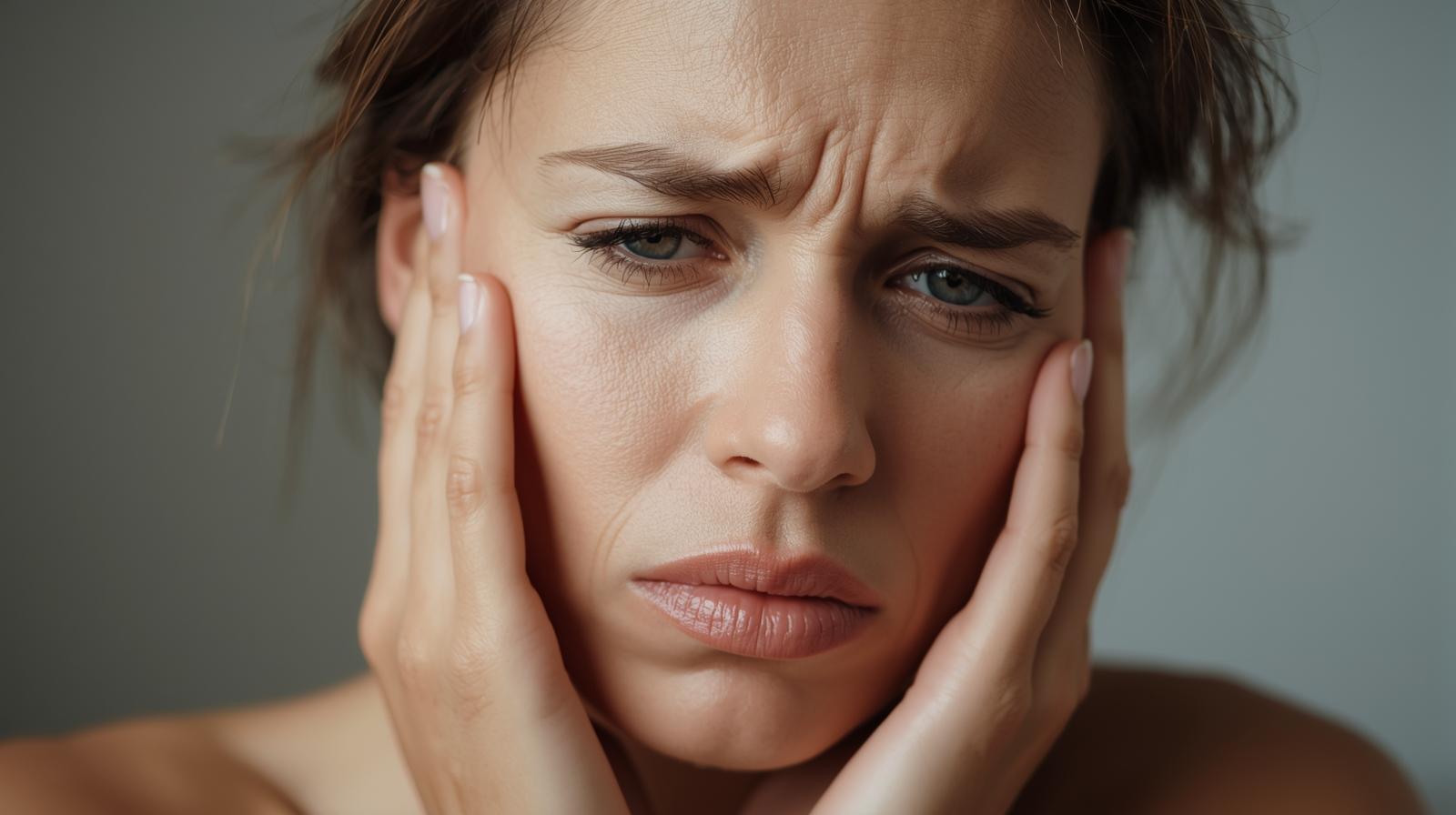
When Your Body Is Speaking: Understanding Stress Habits Like Teeth Tapping
You might not even realise your body is doing it at first.
A quiet tap of your teeth while you’re answering emails.
A jaw that feels tight for no obvious reason.
A little movement that seems to happen all on its own.
And then one day you notice it and think, Why can’t I stop this?
When your body is speaking, it rarely uses words. It uses sensations, habits, and small signals that are easy to dismiss or criticise. Stress habits like teeth tapping aren’t random, annoying behaviours. They’re messages. They’re your nervous system quietly saying, I’m under pressure and I need some support.
In this post, we’re going to slow things down and listen. You’ll learn why stress shows up in the body as habits, what teeth tapping and jaw clenching are really about, and how family stress, exhaustion, and lack of sleep all play a role. More importantly, you’ll discover gentle, realistic ways to respond without forcing calm or adding another thing to your mental to-do list.
No fixing. No shaming. Just understanding what your body is trying to tell you and how to meet it with a bit more kindness.
Table of Contents
- Why Stress Shows Up as Physical Habits
- Teeth Tapping, Jaw Clenching and the Nervous System
- A Real-Life Story: When the Body Takes Over
- Why Sleep Deprivation Makes Everything Worse
- The Hidden Emotional Load of Family Stress
- Why Telling Yourself to “Stop It” Doesn’t Work
- What Your Body Is Actually Asking For
- Gentle Ways to Release Stress Without Forcing Calm
- Creating Safety Instead of Control
- When Stress Habits Become a Health Issue
- Etsy Printables You Might Love
Why Stress Shows Up as Physical Habits
We’ve been taught to think of stress as a mental thing.
Too many thoughts. Too much worry. Too much overthinking.
But stress actually lives in the body first. The body reacts before the mind has time to explain what’s going on. It tightens, braces, prepares. That’s survival mode.
When stress becomes ongoing, especially family-related stress, the body doesn’t get the memo that it’s safe again. So it finds ways to release that built-up energy.
That’s where habits come in.
Common stress habits include:
- Teeth tapping or jaw clenching
- Nail biting or skin picking
- Foot bouncing or leg shaking
- Shoulder tension
- Holding your breath without noticing
These aren’t bad habits. They’re coping strategies.
According to Beyond Blue Australia, stress often presents physically before people recognise it emotionally, especially in prolonged or complex life situations.
Your body isn’t being annoying.
It’s being resourceful.
Teeth Tapping, Jaw Clenching and the Nervous System
Let’s talk about the jaw.
The jaw is closely linked to the fight-or-flight response. When your nervous system senses threat or pressure, it prepares the body for action. That includes tightening muscles that help you speak, bite, or defend.
Even when the “threat” is emotional.
Family conflict. Worry about loved ones. Unspoken resentment. Feeling responsible for everyone else’s wellbeing. It all lands somewhere, and often that somewhere is the jaw.
Teeth tapping is a form of micro-movement. It’s the nervous system discharging excess energy in a way that doesn’t require conscious effort.
The Australian Psychological Society notes that repetitive movements can be a sign of heightened nervous system arousal rather than anxiety disorders themselves.
In plain English?
Your body is trying to calm itself.
A Real-Life Story: When the Body Takes Over
A few years ago, I went through a stretch where family stress sat on my chest like a brick.
Nothing dramatic on the outside. Life still looked functional. But inside, I was exhausted, worried, and quietly holding everyone together.
I didn’t notice the jaw clenching at first. Then came the headaches. Then the teeth tapping. Then the moment my dentist gently asked, “Have you been under much stress lately?”
I laughed. Of course I did.
Then I cried in the car.
I wasn’t weak. I wasn’t failing. I was coping the only way my body knew how.
That realisation changed everything.
Why Sleep Deprivation Makes Everything Worse
If you’re not sleeping properly, stress habits tend to crank themselves up a notch.
Sleep is when the nervous system resets. When you’re tired, your body has fewer tools to self-regulate, so it relies more heavily on automatic behaviours.
According to Sleep Health Foundation Australia, chronic sleep deprivation increases physical stress responses and reduces emotional resilience.
This is why:
- Small things feel enormous
- Habits become harder to control
- Emotions sit closer to the surface
And it’s also why telling yourself to “just relax” feels laughable when you’re running on four broken hours of sleep and a strong long black.
The Hidden Emotional Load of Family Stress
Family stress is a special kind of exhausting.
It’s layered. Emotional. Ongoing. Often invisible to outsiders.
You might be:
- Supporting adult children
- Caring for ageing parents
- Navigating estrangement or conflict
- Carrying worry you can’t fix
That emotional load doesn’t switch off at night. The body stays alert because it believes it needs to stay ready.
And so the habits continue.
As Lifeline Australia highlights, prolonged family stress can keep the nervous system in a constant state of vigilance, even when nothing is actively happening.
Why Telling Yourself to “Stop It” Doesn’t Work
Here’s the frustrating bit.
Stress habits don’t respond well to discipline.
They’re not conscious choices. They’re reflexes. When you try to force them away, your nervous system often reads that as more pressure.
Which leads to more tapping.
Instead of stopping the habit, the goal is to support the system underneath it.
Think of it like this. If the smoke alarm keeps going off, yelling at it won’t help. You need to deal with what’s causing the smoke.

What Your Body Is Actually Asking For
Most stress habits are asking for one of three things:
- Safety
- Release
- Rest
That’s it.
Not a full lifestyle overhaul. Not yoga at sunrise unless you enjoy that sort of thing. Just basic nervous system needs.
Once you start responding to those needs, the habits often soften on their own.
Gentle Ways to Release Stress Without Forcing Calm
This is where we get practical.
Simple jaw release
- Let your lips part slightly
- Rest your tongue on the floor of your mouth
- Drop your shoulders
Ten seconds is enough.
Swap the habit, don’t fight it
Offer your body a gentler movement:
- Slow foot presses into the floor
- Rolling your shoulders
- Stretching your hands
Breathe for the exhale
Longer exhales calm the nervous system.
Try:
- Inhale for 4
- Exhale for 6
Three rounds. That’s all.
Name the moment
Quietly say, “This is stress.”
Naming reduces intensity.
According to Harvard Health, body-based calming techniques are more effective during stress than cognitive strategies alone.
Creating Safety Instead of Control
Here’s a truth we don’t talk about enough.
Calm doesn’t come from control.
It comes from safety.
Safety looks like:
- Letting yourself rest without earning it
- Lowering expectations during hard seasons
- Allowing emotions without fixing them
Sometimes the most powerful thing you can do is lie down, put your hand on your chest, and do absolutely nothing for five minutes.
Radical, I know.

When Stress Habits Become a Health Issue
Most stress habits are harmless. But it’s worth checking in if:
- Jaw pain becomes constant
- Teeth are damaged
- Headaches or neck pain increase
- Anxiety feels unmanageable
A GP, dentist, or psychologist can help rule things out and offer support. There’s no medal for coping alone.
Etsy Printables You Might Love
If you’re someone who finds comfort in gentle structure, visual reminders, and small daily anchors, you might like these from my Etsy shop:
- My Meaningful Daily Planner and Question Cards – to help you focus on what truly matters
- My Dream Life Map – Helps replace survival thinking with intentional planning.
No pressure. Just tools if you want them.
Teeth tapping isn’t a problem to eliminate.
It’s a message to understand.
When you stop fighting your body and start listening to it, something shifts. The tension softens. The habits ease. And you realise you were never broken. Just tired, stressed, and doing your best.
And honestly, that’s enough.
If this resonated with you, I’d love to hear from you. Please leave a comment and share your experience
And tonight, if nothing else, unclench your jaw, pour a glass of something nice, pat the dog, and remember this:
You don’t need fixing.
You need kindness.